


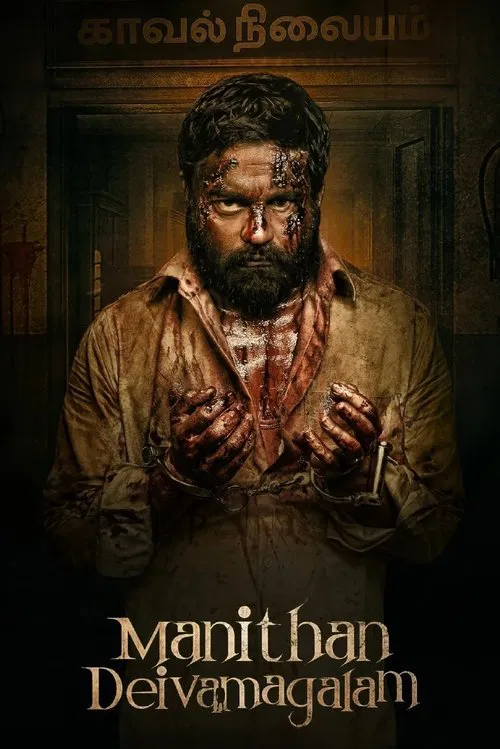
Manithan Deivamagalam is a 2026 Tamil-language crime drama that marks a significant shift in the career of filmmaker-turned-actor Selvaraghavan. Directed by Dennis Manjunath, the film is an atmospheric, grounded exploration of morality, social justice, and the thin line between a common man and a savior. Arriving at a time when rural dramas are evolving into gritty, realistic portrayals of systemic rot, this film offers a haunting narrative that challenges the audience’s perception of “divinity” through human action.
Manithan Deivamagalam: Movie Overview
| Feature | Details |
| Release Date | April 10, 2026 |
| Director | Dennis Manjunath |
| Lead Cast | Selvaraghavan, Kushee Ravi, Mime Gopi, Y.G. Mahendran |
| Genre | Crime, Rural Drama |
| Music | A. K. Priyan |
| Cinematography | Ravi Varma K |
| Runtime | Approx. 145 Minutes |
Full Plot Synopsis
The story is set in a picturesque, remote village in Tamil Nadu, where life moves at a pace dictated by nature and tradition. Selvaraghavan plays an ordinary man who leads a quiet life, serving as a pillar of his small community. However, the village’s tranquility is shattered by a sudden, violent tragedy involving land encroachment and tax-related corruption—a central allegory used throughout the film to represent the modern man’s struggle against invisible bureaucratic monsters.
As the villagers are pushed to the brink by powerful external forces, the protagonist finds himself caught in a moral crossfire. Forced to abandon his pacifist nature, he takes up a crusade to protect his people’s birthright. The narrative structure is non-linear, juxtaposing his current state as a blood-soaked, weary prisoner in custody with his past as a gentle, storytelling uncle to the village children.
The “Manithan” (Human) eventually evolves through trial by fire. His actions, though violent and legally questionable, are born out of a selfless necessity. By the final act, the film explores how the collective desperation of a village transforms a mortal man into a “Deivamagalam” (Divine Child/Protector)—not through supernatural means, but through the myth-making of a community that finally finds a voice in him.
Detailed Critique: An Artistic Breakdown
Direction and Screenplay
Dennis Manjunath demonstrates a keen eye for “rural noir.” Rather than relying on the “masala” tropes of a hero single-handedly taking down a hundred men, Manjunath focuses on the psychological toll of violence. The screenplay is dense, using the village as a character itself. The dialogue, particularly the allegories about taxes and the “debt of the soil,” elevates the film from a standard revenge flick to a socio-political commentary.
Performances
-
Selvaraghavan: Delivering perhaps his most physically and emotionally demanding performance, Selvaraghavan anchors the film. His transition from the warmth of a community leader to the cold, calculated intensity of a man with nothing left to lose is masterful. His expressive silences speak louder than the film’s few high-octane dialogues.
-
Kushee Ravi: Playing the female lead, Ravi provides the emotional core. Despite the language barrier often present for actors in cross-industry roles, her performance is rooted in a deep, relatable vulnerability.
-
Supporting Cast: Mime Gopi is terrifying as the antagonist, representing the faceless greed of the elite, while Y.G. Mahendran adds a layer of seasoned gravitas that provides a necessary contrast to the film’s grittiness.
Visuals and Sound
Ravi Varma K’s cinematography is a highlight. The film utilizes a muted, earthy color palette that mirrors the dirt and blood of the narrative. The lighting in the custody scenes is stark and claustrophobic, contrasting with the wide, sprawling shots of the village greenery.
The music by A. K. Priyan is hauntingly effective. The background score eschews traditional “heroic” themes in favor of dissonant, atmospheric tracks that heighten the tension. The song “Thanga Rathiname” serves as a poignant motif for the innocence lost during the course of the story.
Strengths & Weaknesses
Strengths
-
Atmospheric Storytelling: The film successfully creates a sense of place and impending doom.
-
Authentic Casting: Choosing Selvaraghavan for a role that requires more “acting” than “action” was a stroke of genius.
-
Social Relevance: The themes of land rights and taxation resonate deeply with contemporary rural issues.
-
Technical Excellence: The cinematography and sound design are top-tier for a mid-budget drama.
Weaknesses
-
Pacing: The second act slows down significantly as it delves into philosophical territory, which might alienate viewers expecting a fast-paced thriller.
-
Dark Tone: The unrelenting grimness of the film makes it a “heavy” watch, potentially limiting its repeat-viewing value for general audiences.
Final Verdict
Manithan Deivamagalam is a bold, uncompromising piece of cinema. It is not designed for those seeking mindless entertainment; rather, it is a rewarding experience for those who appreciate nuanced character studies and “slow-burn” storytelling. Dennis Manjunath has crafted a film that is as much a visual poem as it is a crime drama. It stands as a testament to Selvaraghavan’s evolving prowess as a performer and is a must-watch for fans of serious, content-driven Tamil cinema.
Review Schema (Structured Data)
| Category | Rating / Details |
| Movie Title | Manithan Deivamagalam (2026) |
| Reviewer | Art 23 |
| Rating | ★★★★☆ (4/5) |
| Best For | Fans of gritty rural dramas, Selvaraghavan fans, and social thrillers. |
| Bottom Line | A visceral, haunting exploration of how human suffering creates modern-day legends. |