


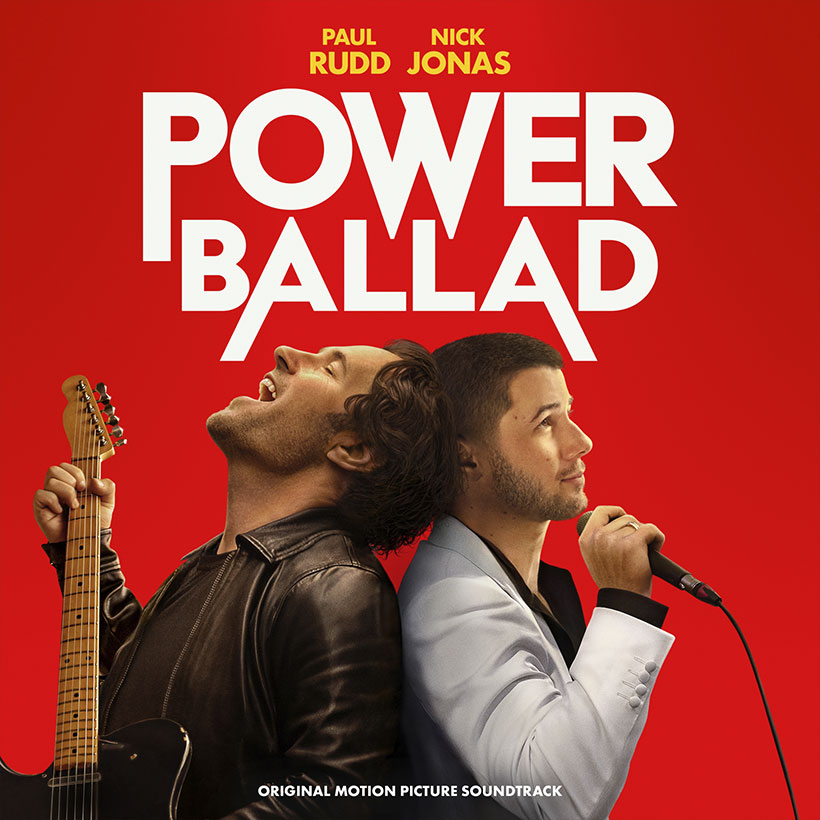
Creative Theft in the Streaming Era: John Carney’s ‘Power Ballad’ Hits a Sharp, Comedic Chord
The intersection of artistic integrity and corporate music commodification has long been fertile ground for cinema, yet few filmmakers navigate this landscape with the specific, melodic humanism of John Carney. With Power Ballad (2026), the Irish director departs from the rain-slicked, micro-budget naturalism of Once (2007) and the nostalgic youth-centric optimism of Sing Street (2016) to deliver a sleek, transatlantic musical dramedy. Moving his focus from the organic streets of Dublin to the high-stakes, algorithm-driven ecosystem of modern pop stardom, Carney examines the fragility of creative intellectual property.
Anchored by an unexpected and highly effective pairing of Paul Rudd and Nick Jonas, the film explores mid-life disillusionment, the psychological cost of obscurity, and the toxic allure of validation. While the feature trades some of Carney’s trademark melancholic grit for a glossier, more mainstream Hollywood template, it remains an insightful, witty, and rhythmically precise exploration of creative ego and artistic ownership.
Power Ballad (2026): Essential Film Metadata
For industry analysts, exhibitors, and cinephiles, the structural and production details of Power Ballad reflect a calculated bridge between independent Irish filmmaking sensibilities and mainstream American star power.
| Production Element | Film Specification Data |
| Title | Power Ballad |
| Director | John Carney |
| Screenplay | John Carney, Peter McDonald |
| Theatrical Release Date | May 29, 2026 (Limited) / June 5, 2026 (Wide) |
| Running Time | 98 Minutes |
| MPAA Rating | R (for pervasive language and brief drug material) |
| Principal Cast | Paul Rudd, Nick Jonas, Marcella Plunkett, Havana Rose Liu, Jack Reynor |
| Cinematography | Yaron Orbach |
| Original Music | Gary Clark, John Carney |
| Production Companies | 30West, Screen Ireland, Likely Story, Treasure Entertainment |
| Distributor | Lionsgate |
Full Plot Synopsis: The Genesis and Theft of an Anthem
The narrative architecture of Power Ballad is driven by a premise that scales a common creative anxiety into a high-stakes legal and psychological battle: the uncredited misappropriation of an artistic epiphany.
The Colliding Worlds of Rick and Danny
The story opens in the working-class suburbs of Dublin, establishing the grounded reality of Rick Power (Paul Rudd). An American ex-patriot and former touring rock musician, Rick chose to stay in Ireland fifteen years prior after falling in love with Rachel (Marcella Plunkett). Together, they have raised their teenage daughter, Aja (Beth Fallon). To sustain his family, Rick fronts “Bride and Groove,” a highly reliable but soul-crushing local wedding band that churns out sanitized, top-40 covers for intoxicated reception guests. Though outwardly resilient, Rick carries the quiet, simmering melancholia of a purist who has bartered his artistic identity for financial stability.
Conversely, the narrative introduces Danny Wilson (Nick Jonas), an American former boy-band sensation whose cultural currency is rapidly plummeting. Trapped in the twilight of his youth, paralyzingly insecure, and suffering from severe writer’s block, Danny is in Ireland under the radar, attempting to conceptualize an “authentic, edgy” solo album to rescue his career from irrelevance.
Following a disastrous corporate event where Rick’s band plays the opening slot, a chance backstage encounter leads to an impromptu, alcohol-fueled late-night jam session in a closed recording studio. Stripping away their respective guards, the two men find a rare moment of genuine musical synchronicity. Over the course of a single night, they co-write a raw, emotionally devastating track—a classic, arena-ready power ballad built around a melancholic hook that Rick had spent a decade quietly workshopping.
[Rick Power: Acoustic authenticity, domestic stability, artistic obscurity]
                                    ⬇
                     [The Late-Night Jam Session]
                                    ⬇
[Danny Wilson: Synthetic celebrity, commercial isolation, creative desperation]
The Betrayal and Viral Ascent
Six months pass, and the euphoric camaraderie of that evening has faded into memory. Rick continues his routine on the Dublin wedding circuit until he is blindsided by a global media launch. Danny has polished, heavily produced, and released their collaborative track as his primary comeback single. The song becomes an overnight streaming phenomenon, dominating social media algorithms and catapulting Danny back to stadium-level relevance.
However, Rick’s name is entirely absent from the credits. The song is packaged by Danny’s management team as a solo, deeply personal breakthrough born entirely from the pop star’s private vulnerabilities. Danny has claimed sole authorship, leveraging Rick’s raw emotional marrow to validate his own superficial brand.
The Campaign for Rectification
Rick’s initial response is characterized by a naive optimism, assuming the omission is a clerical oversight that can be resolved by a direct phone call. However, he is quickly met with a wall of corporate bureaucracy, high-priced entertainment attorneys, and protective publicists who systematically gaslight him. Realizing that Danny has no intention of sharing the credit, Rick’s frustration hardens into an obsessive, scorched-earth crusade to reclaim his legal and artistic legacy.
As Rick launches an asymmetrical campaign against Danny’s multi-million-dollar apparatus, his personal life in Dublin begins to deteriorate. He exhausts his family’s modest savings on legal retainers and alienates Rachel by prioritizing an abstract concept of credit over the concrete stability of his home. The film’s second half evolves into a sharp psychological tug-of-war, tracking Danny’s escalating panic as his arena tour approaches and Rick’s dangerous descent into an obsession that threatens to destroy the genuine wealth already present in his life.
Detailed Critique: Form, Performance, and Cinematic Craft
Screenplay and Direction: A Glossier Cinematic Canvas
John Carney, working alongside co-writer Peter McDonald, demonstrates his characteristic fluency in the language of musical collaboration. Carney understands that the act of writing a song is fundamentally cinematic when executed with energy; the centerpiece scene mapping the spontaneous creation of the ballad is the film’s undisputed high point, captured with a fluid, kinetic camera that mirrors the rhythm of inspiration.
However, Power Ballad marks a distinct departure from the visual identity of Carney’s earlier works. Working with cinematographer Yaron Orbach, Carney trades handheld, naturalistic textures for a highly polished, anamorphic look. This aesthetic shift serves the narrative contrast well—pitting the warm, slightly cluttered domesticity of Ireland against the cold, neon-drenched, cavernous spaces of modern pop arenas—but it occasionally dilutes the unvarnished emotional intimacy that made Once and Sing Street feel so distinctly personal.
Acting and Character Interactivity: Deconstructing Type
The dramatic weight of the film rests entirely on the counter-intuitive casting choices, which pay off handsomely by subverting audience expectations.
-
Paul Rudd delivers one of the most grounded, subversively dark performances of his career. He suppresses his innate, effortlessly cheerful charisma to give Rick an undercurrent of mid-life exhaustion and impotent, simmering rage. It is a highly nuanced portrayal of a decent man driven to the brink of irrationality by professional humiliation.
-
Nick Jonas is a revelation as Danny, leaning heavily into a self-aware, satirical critique of his own real-world industry background. Jonas wisely resists the temptation to play Danny as a cartoonish villain; instead, he portrays him as a fragile, desperate product of the studio system, terrified of obscurity. The theft is framed not as malicious greed, but as an act of artistic survival.
-
Marcella Plunkett provides the narrative’s essential moral anchor as Rachel. She prevents the film from spinning into a purely cynical industry satire by reminding the audience of the real-world collateral damage caused by Rick’s obsession.
Visual Architecture and Sound Design
The visual design elegantly mirrors the thematic divide of the screenplay. Orbach’s camera frames Rick’s world in warm earth tones, shallow depth of field, and organic lighting that emphasizes his connection to his immediate surroundings. In contrast, Danny’s environment is defined by harsh, high-contrast blues, sterile whites, and massive, empty frames that accentuate his emotional isolation despite his immense fame.
The sound design and musical score, supervised by Carney and composer Gary Clark, operate as secondary narrative engines. For the plot to function, the titular power ballad must be an undeniable masterpiece. The songwriting team successfully delivers a track that convincingly shifts forms—moving from an intimate, acoustic folk confession in its infancy to a wall-of-sound, stadium-shaking electronic pop anthem in its final iteration, perfectly illustrating how raw art is processed and packaged for mass consumption.
Strengths and Weaknesses
Strengths
-
Subversive Performance Dynamics: The chemistry between Rudd and Jonas thrives on their willingness to play against their established public personas.
-
Authentic Musical Anatomy: The film brilliantly deconstructs the mechanics of songwriting, capturing the genuine euphoria of creative synchronization.
-
Sharp Industry Satire: The screenplay offers a witty, uncompromising look at the contemporary music industry’s reliance on algorithms, branding, and manufactured vulnerability.
-
Balanced Pacing: At 98 minutes, the narrative maintains a brisk, economical momentum that avoids third-act stagnation.
Weaknesses
-
Reduction in Emotional Weight: The polished aesthetic and conventional pacing prevent the film from achieving the deep, melancholic resonance of Carney’s early masterpieces.
-
Conventional Resolutions: The final resolution of the legal and familial conflicts relies on somewhat predictable dramedy tropes that feel slightly too neat given the toxic escalations of the second act.
-
Underwritten Supporting Arcs: The characters played by Havana Rose Liu and Jack Reynor are underutilized, serving primarily as functional plot devices rather than fully realized individuals.
Final Verdict
Power Ballad does not scale the transcendent emotional heights of Once, but it stands as John Carney’s most commercially sharp and flat-out entertaining film in a decade. Driven by a remarkably mature performance from Paul Rudd and a brave, self-deprecating turn from Nick Jonas, the film offers a highly watchable, witty, and timely meditation on artistic ownership in an era where celebrity capital often eclipses genuine craft. It is a resonant crowd-pleaser that firmly understands that while a song can be stolen, the soul that engineered it cannot.
Final Rating: 3.5 out of 5 Stars
Review Schema
{
  "@context": "https://schema.org/",
  "@type": "Review",
  "itemReviewed": {
    "@type": "Movie",
    "name": "Power Ballad",
    "image": "",
    "dateCreated": "2026",
    "director": {
      "@type": "Person",
      "name": "John Carney"
    },
    "actor": [
      {
        "@type": "Person",
        "name": "Paul Rudd"
      },
      {
        "@type": "Person",
        "name": "Nick Jonas"
      }
    ]
  },
  "reviewRating": {
    "@type": "Rating",
    "ratingValue": "3.5",
    "bestRating": "5",
    "worstRating": "1"
  },
  "author": {
    "@type": "Person",
    "name": "Film Critic"
  },
  "reviewBody": "John Carney's Power Ballad is a sharp-witted, highly engaging exploration of creative ownership and mid-life disillusionment. Featuring exceptional, type-defying performances from Paul Rudd and Nick Jonas, the film effectively balances industry satire with earnest musical drama, even if it trades a portion of Carney's signature indie grit for a glossier studio finish."
}