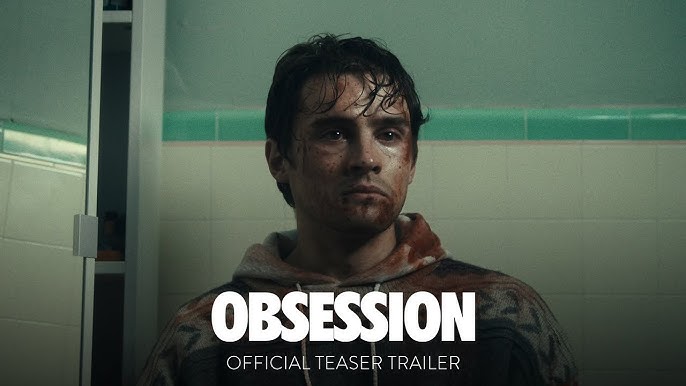
# In Too Deep: How Curry Barker’s ‘Obsession’ Subverts the ‘Nice Guy’ Trope
The horror genre has long warned audiences about the dark reality of unchecked desires. From W.W. Jacobs’ seminal short story *The Monkey’s Paw* to modern cinematic parables, the narrative architecture of the cursed wish is firmly established. Yet, every generation requires a filmmaker capable of reframing these classical anxieties through a contemporary lens.
Enter writer-director-editor Curry Barker. Following his breakthrough online success with the micro-budget short film *Milk and Serial*, Barker makes a staggering theatrical feature debut with ***Obsession***. A supernatural psychological thriller, the film serves as a pitch-black mirror to the internet era’s fraught gender dynamics, male loneliness, and romantic entitlement.
Originally premiering in the Midnight Madness section of the Toronto International Film Festival (TIFF), where it secured the runner-up spot for the prestigious People’s Choice Midnight Madness Award, *Obsession* quickly became the talk of the industry. Acquired by Focus Features for global distribution, the film has undergone a triumphant box office run, grossing over $100 million worldwide against a modest production budget. By weaponizing a supernatural premise to dissect real-world psychological terrors, Barker has delivered one of the most culturally resonant and deeply unsettling horror films of the decade.
—
## Technical Overview and Production Details
For cinephiles and digital audiences looking for comprehensive data on this breakout horror phenomenon, the production details of *Obsession* highlight its meteoric rise from independent roots to a major theatrical success.
| Metadata Category | Film Production Details |
| — | — |
| **Title** | *Obsession* |
| **Director / Writer / Editor** | Curry Barker |
| **Lead Cast** | Michael Johnston, Inde Navarrette, Cooper Tomlinson, Megan Lawless, Andy Richter |
| **Cinematographer** | Taylor Clemons |
| **Composer** | Rock Burwell |
| **Production Companies** | Tea Shop Productions, Capstone Studios, Under the Shell |
| **Distributor** | Focus Features (Domestic), Universal Pictures International (International) |
| **Release Dates** | September 5, 2025 (TIFF Premiere), May 15, 2026 (United States Theatrical Release) |
| **Runtime** | 109 minutes |
| **MPAA Rating** | R (for strong horror violence, disturbing behavior, language, and drug references) |
| **Box Office Earnings** | $100.6 Million Worldwide |
—
## Full Plot Synopsis: When a Cursed Wish Becomes Reality
*Obsession* centers on Baron “Bear” Bailey (Michael Johnston), a soft-spoken, painfully awkward young man who works at a family-owned Los Angeles music store. The establishment is managed by the good-natured Carter Harper (Andy Richter). Bear’s social world is entirely bounded by his tight-knit circle of co-workers and childhood friends: the charismatic Ian (Cooper Tomlinson), Carter’s level-headed daughter Sarah (Megan Lawless), and Nikki Freeman (Inde Navarrette). For years, Bear has harbored an intense, unspoken romantic fixation on Nikki. Paralysed by social anxiety and a profound fear of disrupting their comfortable dynamic—which is anchored by regular trivia nights at a local bar—Bear continually fumbles his attempts to express his true feelings.
The narrative shifts down a darker path following a domestic tragedy. Bear returns to his apartment to discover that his beloved cat, Sandy, has died after accidentally consuming stray oxycodone pills left in the home. Grief-stricken and feeling entirely alienated from the world, Bear stops by a local occult novelty shop. Ostensibly searching for a gift for Nikki, he purchases an item called a “One Wish Willow”—a cheap, $7.99 wooden trinket that promises to grant the user a single, ultimate desire when snapped in half.
Later that evening, after another agonizingly awkward interaction where it becomes painfully clear that Nikki views him strictly as a platonic friend, Bear retreats to his room in a state of bitter emotional despair. Driven by an intense wave of romantic frustration and a belief that he is owed reciprocation, he snaps the One Wish Willow and wishes aloud that Nikki would love him *”more than anyone else in the fucking world.”*
The next morning, the supernatural mechanics of the trinket manifest with terrifying speed. Bear is horrified to discover that Nikki has entered his apartment and constructed an elaborate, highly disturbing memorial utilizing the physical remains of his dead cat. When Bear confronts her, Nikki exhibits manic, erratic behavior, brushing off her actions by claiming she is merely coming down from an MDMA trip. She then suddenly confesses an overwhelming, breathless, and total devotion to Bear, completely reversing her years of platonic boundaries.
Initially, Bear is blinded by validation. He quickly indulges in this long-desired romantic turnabout, choosing to ignore the deeply strange circumstances of her sudden shift. The two become an official couple, leaving Ian and Sarah completely flabbergasted. However, cracks in the illusion surface immediately. Ian pulls Bear aside to reveal a troubling detail: the very day before, Nikki had explicitly stated that she viewed Bear strictly “like a brother.” Furthermore, Nikki claims her manic behavioral shifts are tied to stress regarding her father’s failing health, but Ian points out that Carter is entirely healthy. When Bear gently questions Nikki about these logical inconsistencies, she spirals into an alarming emotional meltdown until a guilt-ridden Bear promises to drop the subject.
The relationship rapidly devolves from a romantic fantasy into a claustrophobic nightmare. The supernatural entity executing the wish begins to aggressively strip away Nikki’s core humanity, reducing her to a wide-eyed, volatile doppelgänger. In an effort to keep his fantasy alive and avoid admitting the horror of what his entitlement has wrought, Bear tolerates increasingly unhinged behavior, including an incident where Nikki aggressively cuts his hair against his will to mark her ownership.
Desperate for answers, Bear calls a customer service support line listed on the One Wish Willow packaging. The voice on the other end of the line (voiced by director Curry Barker himself) acts as an indifferent, detached entity. The representative coldly informs Bear that the cheap magic has performed exactly as requested, and states that there are only two paths for the curse to terminate: either he dies, or she does.
The horror peaks when the entity controlling Nikki begins systematically isolating Bear from his support system. Realizing that their friend is being psychologically held hostage, Ian and Sarah attempt to intervene. In a fit of protective, supernatural malice, Nikki brutally murders Sarah, mutilating her body.
Horrified and desperate to undo the curse, Bear tracks down the final remaining One Wish Willow from the occult shop and returns home, intending to force Nikki to reverse the spell. Instead, he walks into a house of horrors. Sarah’s mangled corpse is on display, and a completely unhinged Nikki is wearing her deceased friend’s clothing. Brandishing a firearm, Nikki traps Bear in the house. When Ian unexpectedly arrives to rescue Bear, Nikki shoots him in the head without a shred of hesitation.
Realizing the absolute hopelessness of his situation and the total destruction caused by his initial selfish desire, Bear flees into the bathroom. He decides to end his life by overdosing on the same oxycodone pills that killed his cat. However, as the lethal dose begins to take effect, panic sets in; Bear changes his mind and desperately tries to induce vomiting. Before he can purge the chemicals, Nikki breaks through the door. In a cruel twist of poetic justice, she snaps the final One Wish Willow, wishing for Bear to remain entirely hers forever. Under the absolute compulsion of the curse, Bear’s remaining autonomy is completely erased. He calmly stands up, ceases his attempts to save himself, kisses Nikki, and collapses into her arms—dying a physical and psychological prisoner of the very obsession he initiated.
—
## Detailed Critique: Themes, Acting, and Technical Execution
### Thematic Analysis: Deconstructing the Myth of Romantic Possession
At its core, *Obsession* is a brilliant, unsparing deconstruction of the “nice guy” trope that has populated Hollywood cinema for decades. Barker uses the classical framework of a supernatural horror film to examine the latent hostility, entitlement, and transactional logic that can fester beneath male rejection sensitivity.
Bear is initially presented as a sympathetic underdog—he is quiet, socially anxious, and seemingly harmless. However, by utilizing a supernatural shortcut to bypass Nikki’s free will, the film exposes the inherent violence of romantic objectification. Bear did not desire to earn Nikki’s affection through mutual vulnerability; he desired to *possess* her autonomy. The film punishes this toxic entitlement by granting his wish with a terrifying literalism. By presenting a version of Nikki that has been entirely hollowed out, *Obsession* argues that absolute devotion without free will is not romance, but an existential nightmare.
### Performance Evaluation: Inde Navarrette’s Unsettling Stardom
While Michael Johnston delivers an excellently measured, increasingly panicked performance as the weak-willed Bear, *Obsession* completely belongs to Inde Navarrette. Stepping away from her more conventional television roles, Navarrette delivers a tour-de-force horror performance that instantly cements itself alongside modern genre icons.
Navarrette executes her transition from a vibrant, sarcastic young woman into the entity colloquially dubbed “Freaky Nikki” with chilling precision. She utilizes a wide-eyed, unblinking glare that switches from suffocating affection to homicidal malice in a fraction of a second. The physical nuances of her performance—sudden, micro-expression twitches, a stiffened posture, and a flat, rhythmic vocal delivery—suggest a human mind violently trapped inside its own skull while a malignant force operates the controls.
“`
[ PERFORMANCE SPECTRUM: INDE NAVARRETTE ]
Platonic Friend ===> Unblinking Devotion ===> Malignant Entity
(Natural & Vibrant) (The “1,000-Yard Stare”) (Unstable Violence)
“`
### Direction and Visual Aesthetic: The Discomfort of Loneliness
Curry Barker’s transition from short-form internet sketches to a feature-length cinematic canvas is visually commanding. Working closely with cinematographer Taylor Clemons, Barker establishes an oppressive visual grammar defined by center-composed framing and unusual, exaggerated head space. This specific framing technique deliberately detaches the characters from their environments, visually reinforcing their emotional isolation and trapping them within the rigid geometry of the screen.
Barker also demonstrates a masterful control over background staging and lighting. In several critical sequences, while Bear is interacting with other characters in a brightly lit foreground, Navarrette’s Nikki remains a soft, out-of-focus silhouette looming in the background, completely motionless, her eyes locked onto Bear. This staging creates an unyielding baseline of anxiety, ensuring that the audience is never permitted to feel safe.
—
## Strengths and Weaknesses
### Strengths
* **Subversive Screenplay:** Barker’s script cleverly updates *The Monkey’s Paw* archetype, effectively transforming it into a sharp critique of contemporary dating anxieties, digital isolation, and toxic masculinity.
* **Masterful Tonal Balancing:** The film expertly transitions from deeply uncomfortable situational irony to stomach-churning psychological dread without losing its narrative footing.
* **Atmospheric Sound and Score:** Rock Burwell’s discordant, creeping electronic score provides a claustrophobic auditory landscape that heightens the film’s tension.
* **Powerhouse Lead Performance:** Inde Navarrette’s physical acting elevates the film, providing a terrifying villain who is deeply unsettling to watch.
### Weaknesses
* **Second-Act Pacing Issues:** Following the initial shock of the wish’s fulfillment, the narrative experiences a slight midsection drag as Bear repeatedly hesitates to act, slowing the momentum before the explosive finale.
* **Suppressed Physical Gore:** Due to pacing choices and the intent to maintain a tight psychological focus, certain pivotal acts of violence—particularly Sarah’s demise—occur off-screen, which may slightly disappoint viewers seeking visceral body horror.
—
## Final Verdict
*Obsession* stands as a remarkably assured, deeply cynical, and brilliantly executed debut feature from Curry Barker. By avoiding the cheap jump scares that characterize mainstream studio horror, the film builds a slow-burn, psychological discomfort that lingers long after the final frame. Anchored by a career-defining performance from Inde Navarrette and a razor-sharp thematic execution, the film establishes Barker as a major new voice in independent genre cinema, drawing favorable comparisons to Zach Cregger’s work on *Barbarian*. It serves as a devastatingly effective reminder that the most terrifying monsters are often born from our own hidden, selfish desires.
**Final Score: 8.5 / 10**
—
## Review Schema
This Structured Data Review Schema is provided to optimize search engine visibility, allowing rich snippets to display directly within Google SERP and Discover feeds.
“`json
{
“@context”: “https://schema.org”,
“@type”: “Review”,
“itemReviewed”: {
“@type”: “Movie”,
“name”: “Obsession”,
“image”: “”,
“dateCreated”: “2025-09-05”,
“director”: {
“@type”: “Person”,
“name”: “Curry Barker”
},
“actor”: [
{
“@type”: “Person”,
“name”: “Michael Johnston”
},
{
“@type”: “Person”,
“name”: “Inde Navarrette”
},
{
“@type”: “Person”,
“name”: “Cooper Tomlinson”
},
{
“@type”: “Person”,
“name”: “Megan Lawless”
}
]
},
“reviewRating”: {
“@type”: “Rating”,
“ratingValue”: “8.5”,
“bestRating”: “10”,
“worstRating”: “1”
},
“author”: {
“@type”: “Person”,
“name”: “Film Critic”
},
“reviewBody”: “A masterfully unsettling directorial debut by Curry Barker. Obsession brilliantly deconstructs modern romantic entitlement through a terrifying, supernatural monkey’s paw lens. Inde Navarrette delivers a powerhouse performance that stands as one of the best in modern horror cinema.”,
“publisher”: {
“@type”: “Organization”,
“name”: “Cinema Insights”
}
}
“`