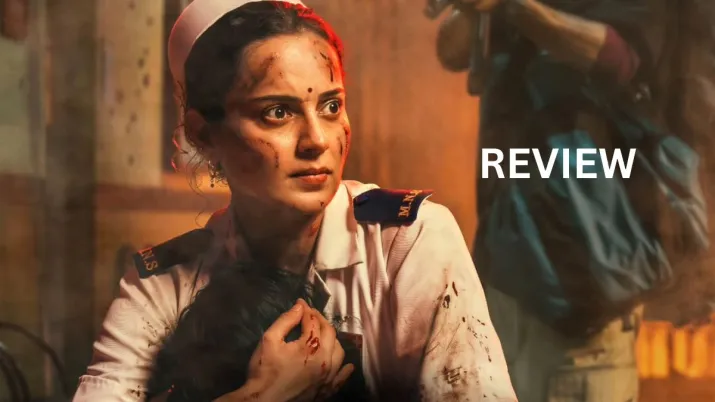
Bharat Bhhagya Viddhaata (2026) Movie Review: A Restrained, Affecting Tribute to Unsung Frontline Heroism
The tragic events of the November 26, 2008, Mumbai terror attacks have been re-examined by Indian cinema and television across multiple formats, usually focusing on police retaliation, military operations, or the siege of luxury hospitality spaces. With Bharat Bhhagya Viddhaata (2026), writer-director Manoj Tapadia shifts the camera lens entirely toward a quieter, domestic form of resilience.
Produced under Pen Studios and Manikarnika Films, this survival thriller tracks the harrowing hours inside Mumbai’s Cama & Albless Hospital, a government healthcare facility heavily populated by expectant mothers and infants that was breached by armed terrorists on that fateful night. Rather than mounting a hyper-masculine, explosive counter-offensive, the film frames patriotism through the prism of vocational duty. Led by a restrained Kangana Ranaut, the narrative explores how systemic, undervalued healthcare workers protected vulnerable lives under direct threat.
Key Information: Cast, Crew, and Release Data
| Attribute | Details |
| Title | Bharat Bhhagya Viddhaata |
| Release Date | June 12, 2026 |
| Director & Writer | Manoj Tapadia |
| Lead Cast | Kangana Ranaut, Girija Oak Godbole, Smita Tambe, Esha Dey, Prasad Oak |
| Producers | Kangana Ranaut, Shailesh R Singh, Dhaval Jayantilal Gada, Babita Ashiwal, Adi Sharmaa |
| Presenter | Dr. Jayantilal Gada (Pen Studios) |
| Runtime | 2 hours 7 minutes (127 minutes) |
| Genre | Historical Drama / Survival Thriller |
| Censor Certification | UA16+ |
| OTT Streaming Partner | ZEE5 (Post-Theatrical Run) |
Full Plot Synopsis
The narrative architecture of Bharat Bhhagya Viddhaata is structurally split into three distinct segments: domestic exposition, the midnight siege, and the morning-after rescue.
The first act introduces Geeta Madhav (Kangana Ranaut), a veteran, senior nurse at the public, women-and-children-only hospital. Tapadia spends significant runtime illustrating the routine micro-struggles of the healthcare workforce. We observe the institutional apathy, the demanding shifts that alienate these women from their families, and the easy, culture-rich camaraderie shared among the nurses—notably the poetic, shayari-loving senior staff nurse (Smita Tambe). This slow exposition grounds the audience in a mundane, fluorescent-lit reality before subverting it entirely.
As night falls, distant gunfire from the nearby Chhatrapati Shivaji Maharaj Terminus (CSMT) echoes through the city, and the chilling reality of a coordinated terrorist strike infiltrates the hospital walls. Two heavily armed Lashkar-e-Taiba operatives breach the gates, bringing immediate violence to the corridors.
[Exterior Chaos: CSMT Attack]
             │
             ▼
[Infiltration of Government Facility]
             │
             ▼
[Tactical Blackout & Patient Concealment]
             │
             ▼
[Sustained Siege & Medical Triage under Fire]
With communication networks failing and state security forces stretched thin across South Mumbai, the internal staff must orchestrate their own survival strategy. To prevent the terrorists from discovering the heavily crowded postnatal and maternity wards, Geeta orders a complete tactical blackout, cutting off the building’s central circuit breakers.
The crux of the film’s tension hinges on this pitch-black cat-and-mouse dynamic. Geeta, along with colleagues played by Girija Oak Godbole and Esha Dey, must quieten weeping newborns, conceal dozens of pregnant women in hidden storage units, and continue high-risk clinical procedures. The narrative hits its emotional apex when a critically ill, hypertensive patient goes into acute labor. Operating purely by flashlight and the muffled audio cues of patrolling militants outside the operating theater door, Geeta and her crew must deliver the child safely without exposing their position.
The third act deals with the dawn arrival of specialized anti-terror units, tracking the psychological toll left behind once the immediate threat is neutralized.
Detailed Critique
Themes: The Dignity of the Uniform
At its thematic center, Bharat Bhhagya Viddhaata is an investigation into structural invisibility. Indian cinema frequently aligns patriotism with uniform-clad combatants. Tapadia intentionally repositions the crisp, white nursing uniform as an identical emblem of civic duty. The script heavily emphasizes that while soldiers are trained to face hostile fire, healthcare workers operate under a contract of care—making their choice to stand their ground an act of pure existential courage. It also critiques how society continuously marginalizes, underpays, and overworks these women, only to rely on their moral framework during an institutional collapse.
Performance and Characterization
Kangana Ranaut delivers one of her most balanced, unadorned performances in recent memory. Historically prone to portraying high-pitched, larger-than-life heroic figures, Ranaut undergoes a visible exercise in subtraction here. Her Geeta Madhav is weary, physically exhausted, and visibly terrified. The camera frequently captures her internal calculations through micro-expressions rather than grand monologues.
The supporting ensemble acts as the true spine of the production. Smita Tambe is exceptionally strong, lending a warm, lyrical vulnerability to the mid-tier staff that undercuts the generic horror of the situation. Girija Oak Godbole embodies the precise, frantic anxiety of a worker caught between maternal instincts for her own family outside and vocational duty to the patients inside.
       [Kangana Ranaut (Geeta Madhav)]
          ├── Internalized Fear & Precision
          └── Grounded, Non-Melodramatic Delivery
                       │
                       ▼ (Balanced By)
                       │
       [Supporting Ensemble (Tambe / Oak)]
          ├── Vernacular Authenticity
          └── Emotional Heavy Lifting in Ensemble Scenes
Direction and Visual Design
Manoj Tapadia’s directorial approach values geographic containment. By restricting the spatial scope primarily to the corridors, stairwells, and wards of the hospital, he crafts a claustrophobic atmosphere.
Cinematographer Ayan Sil excels in maximizing the visual pivot of the second act. Once the hospital plunges into darkness, Sil relies on harsh, low-key lighting, casting deep shadows and stark silhouettes against the peeling paint of the government facility. This aesthetic avoids the slick, hyper-stylized look of Hollywood survival pieces, settling instead for an unsettling, documentary-style grittiness.
Sound and Screenplay
The sonic landscape relies heavily on negative space. The creative choice to minimize an overbearing, melodramatic background score allows the cold, diegetic sounds—the distant crackle of automatic weapons, the squeak of nursing clogs on linoleum, the heavy breathing of hidden patients—to build authentic suspense.
Ritesh Shah’s screenplay is highly focused but occasionally insular. While keeping the lens locked onto the hospital provides a concentrated dose of tension, it sometimes isolates the film too much from the broader emotional and logistical canvas of the 26/11 attacks, leaving the scale feeling somewhat constrained.
Comprehensive Analytical Overview
To evaluate the film’s placement within modern historical survival cinema, the table below highlights its core structural execution across primary cinematic criteria:
| Cinematic Pillar | Narrative Execution | Critical Impact |
| Pacing | Slow exposition transitioning into an intense, real-time midnight survival sequence. | Strong second act, though the third act suffers from slight structural repetition. |
| Tonal Consistency | Eschews jingoistic, high-decibel monologues for realistic, panic-driven decision making. | Refreshingly grounded; treats historical trauma with dignity rather than exploitation. |
| Visual Architecture | Transition from bright, clinical fluorescent whites to high-contrast, shadowed blacks. | Enhances the claustrophobic dread of being hunted in a familiar space. |
| Character Depth | Focuses heavily on the central protagonist’s immediate survival choices. | Strong emotional anchor, though minor supporting staff lack structural backstories. |
Strengths and Weaknesses
Strengths
-
Unflashy Restraint: The production deliberately avoids graphic, exploitative depictions of casualties, focusing entirely on the psychological resilience of the survivors.
-
Ranaut’s Subdued Acting: A welcome departure from typical star-vehicle mannerisms, prioritizing ensemble coherence over singular dominance.
-
Atmospheric Cinematography: The utilization of low-light cinematography transforms a mundane medical setting into a highly tense battlefield.
-
Socio-Cultural Dignity: Gives genuine, un-sexualized professional respect to a segment of the labor force rarely highlighted in mainstream Hindi cinema.
Weaknesses
-
Pacing Irregularities: The film experiences narrative drag in the late second half, running through multiple false endings before reaching its actual resolution.
-
Bilingual Redundancy: The script occasionally stumbles by having inherently Marathi-speaking characters repeat structural lines in Hindi for audience convenience, breaking conversational realism.
-
Narrow Spatial Scope: By entirely filtering out the macro-response of Mumbai’s security infrastructure, the film occasionally feels like a televised chamber drama rather than an expansive theatrical event.
Final Verdict
Bharat Bhhagya Viddhaata functions as a commendable, atmospheric piece of historical counter-programming. It rejects the loud, sensationalist tropes that frequently infect modern Indian patriotic cinema, choosing instead to find its heroism in the quiet execution of professional duty. While it suffers from minor script redundancies and a slightly overextended runtime of 127 minutes, the film stands tall on the back of its technical discipline and a grounded, sincere ensemble performance led by Kangana Ranaut. It is a vital, localized chronicle of survival that honors the ordinary citizens who kept humanity alive during one of India’s darkest nights.
Final Rating: 3.5 / 5 Stars